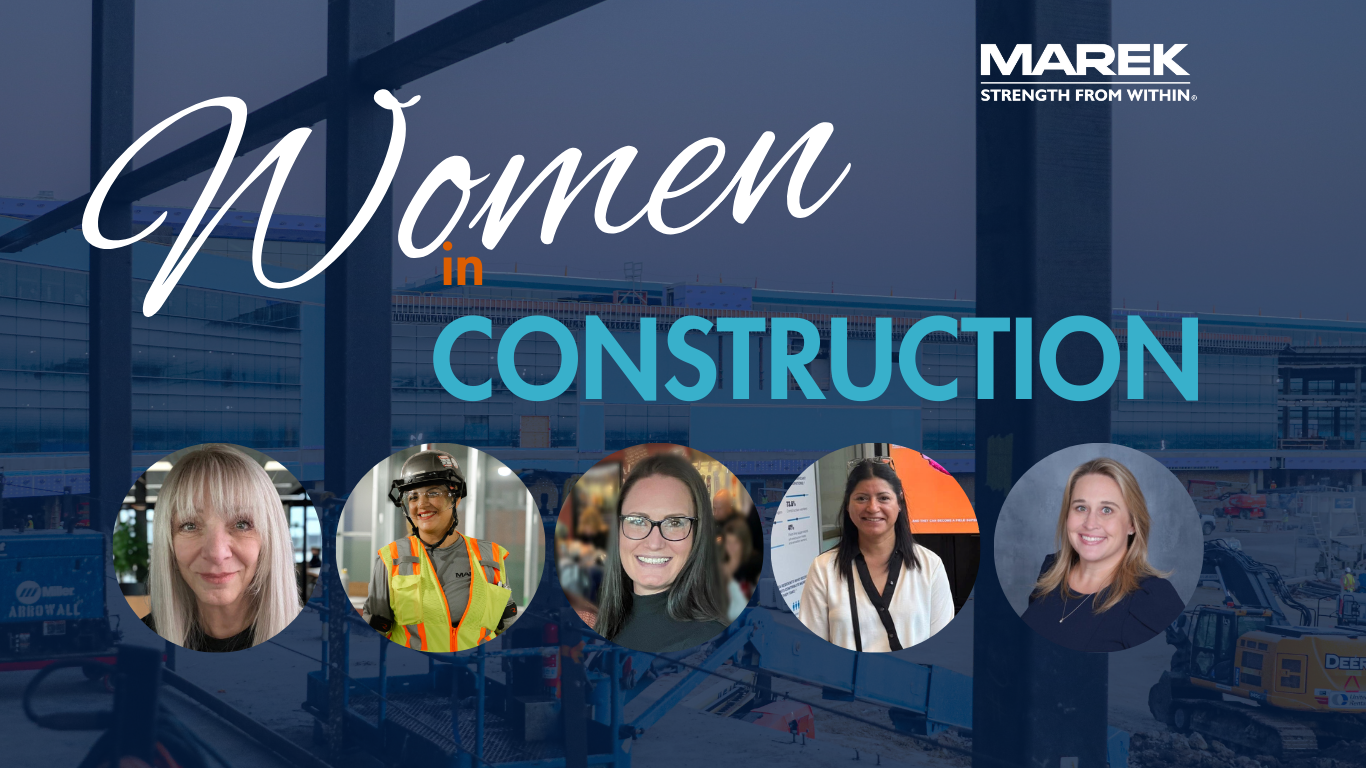
Success for women in construction demands confidence and action, urging them to overcome self-doubt and believe in their abilities. Leaders must prioritize integrity, continuous learning, and networking to surround themselves with good people.
More women are entering construction careers that offer a dynamic mix of challenge and problem-solving with a rewarding finished product.
The latest U.S. Bureau of Labor Statistics (BLS) data show more than 1.3 million women worked in the construction industry in 2024, representing approximately 11.2% of the construction workforce—the highest share in 20 years.
An industry pulse from the National Association of Home Builders (NAHB) reports the share of women construction employees has increased every year since 2012, after the losses following the Great Recession in 2008.
Finding their Voice
In the 1980s, Donna Hand was an estimator/project manager for a commercial overhead door company in New York City—one of the country’s very few women in the same position. She enjoyed the design, engineering and installation process.
After leaving the job, she attended New York City Technical College to add book knowledge to her field experience. Hand was then among just 10% of applicants accepted to a special diploma program at New York University for working construction professionals.
“I felt I had to know three times more than a man in my position just to be taken seriously,” said Hand, senior estimator, Special Products Division, MAREK, Coppell, Texas.
Early in her career, her number one challenge was how she was received on a construction site for a meeting.
“I was actually asked more than once, ‘Why did they send you?’” she said. “My answer would be, ‘Because I know what I’m doing.’ If we were collaborating and working out a detail and I had an effective idea, I had to push myself to verbalize it instead of waiting for someone else to finally think of it themselves.”
Fast-forwarding, she now inhabits a much different environment.
“It’s so much easier today being a woman in construction compared to how it used to be,” said Hand. “There are more capable, intelligent women in key roles building amazing structures. I had to learn and respect that my own worth, my knowledge and expertise for my trade were equal to those I was working with in their trade.”
Early in her career, Mindy Griffeth said one of her top challenges was finding her voice in a room where she was often the only woman.
“My approach has always been to listen more and speak up when I have a resolution,” said Griffeth, estimator/project manager III, MAREK, Marietta, Georgia. “I didn’t come into the industry trying to be the loudest, I earned respect by knowing what I was talking about and following through on what I said I’d do. Over time, people notice consistency and competence. You don’t have to demand respect when your work proves you deserve it.”
Katie Cvelbar echoes the experience.
“Being on the quieter side has been a bit of a challenge for me in a male dominated field,” said Cvelbar, marketing and business development manager, Sika USA, Shakopee, Minnesota. “I have needed to learn how to be more confident and speak up without waiting for an invitation.”
Career Drivers: From Deep Roots to Opening Doors
The catalyst for pursuing construction careers are as diverse as the roles—including early influences, finding the perfect fit and discovering opportunities for women.
Corie Patton, principal, TriCoast Building Group, LLC., Gainesville, Florida, launched the company with her father, who worked in the drywall industry in Dallas, Texas, where she grew up.
“Many Saturdays were spent walking job sites with him,” she recalled. “I was captivated not just by the buildings but by the people who built them, the coordination of trades, the everyday challenges and the in-the-trench problem solving. Watching my father work with integrity and determination sparked my curiosity and admiration for the craft.”
As a longtime Las Vegas, Nevada, resident, Alma Carnero was driven by her surroundings.
“The constant evolution of our city, especially on The Strip, is what inspired me to pursue a career in construction,” said Carnero, associate project engineer, Performance Contracting, Inc. (PCI), Las Vegas. “There is something new constantly happening here—new resorts, stadiums and attractions—and I wanted to be part of the growth.”
When Sandra Vasquez started her career, she was surprised that she could work in the field.
“Back in 2006, I didn’t know women could work on a construction site until one of my female friends told me she was working as a laborer,” recalled Vasquez, finishing field supervisor, MAREK, Houston, Texas. “That was when I decided to make a career in construction. First, because I like to get my hands on work, and second, because I like to resolve the challenges involving a construction site.”
Vicki Galie grew up in the industry, watching her carpenter grandfather who passed down his company to her mother and uncle in the 1990s.
“I went on to major in construction management in college and started working for my family’s company right away,” said Galie, project manager, Heartwood Building Group, Inc., Philadelphia, Pennsylvania.
Stacy Gunderson, craft talent development manager, MAREK, San Antonio, Texas, also grew up around construction with a father and a brother in the industry.
“I initially started my career in the field and worked in several different areas and was given an opportunity to focus on advocacy about three years in,” she said.
Griffeth of MAREK did not plan to work in construction.
“I’ve always loved problem solving, organizing chaos, and seeing ideas come to life in a tangible way,” she said. “Early in my career, I realized construction offered the perfect mix of structure and creativity. Every project has moving parts, challenges, and people to bring together.”
Although Lucia Eitelbach had always been fascinated by construction and architecture, she also did not plan on a construction career. She started at PCI while still in school for business management and accounting.
“What has inspired me to stay in construction is that there are so many moving parts,” said Eitelbach, branch administrator, PCI Las Vegas. “It takes a lot of planning and coordination, and everything is connected. I have learned so much and continue to learn every day. It keeps things exciting.”
From an early age, Amy Hockett was fascinated by design and how things were built and assembled.
“My mom subscribed to magazines like Southern Living and Better Homes & Gardens, and I would flip to the back pages to study the house plans,” explained Hockett, AIA, CDT, LEED Green Associate, national marketing manager, Architectural Services and Sustainability, National Gypsum Company.
Hockett said she would spend hours redrawing, imagining how the design could be improved, and understanding the relationship between spaces.
“That curiosity sparked my passion for architecture and construction,” she said. “I’ve always been intrigued by the process and details—how materials, ideas, and craftsmanship combine to create something lasting.”
Monika Murcinova, design engineer, PCI Las Vegas, Nevada, said she was drawn to construction because it gives her the opportunity to combine technical thinking with real-world impact.
“BIM/VDC inspired me, because it allows me to work with advanced technology to bridge the gap between digital models and real-world construction, seeing projects from concept to completion,” she explained.
When she entered the field, Cvelbar was working for a small consulting firm, looking to change industries and grow her career.
“I enjoy working on products that go into the buildings around me and being challenged on how to improve their performance, sustainability, safety or application,” she said.
Field of Dreams: Navigating Challenges
As one of MAREK’s few women field supervisors, Vasquez said her top challenge is sometimes working with men who do not think women can do the same work.
Trying to show some men that I am capable of the work being done—that I have the knowledge to be a supervisor, the experience that the job has given me through all these years that I worked hard,” she said.
Amelia Craps said a major challenge has been establishing a strong and respected reputation within the industry.
“Early in my career, I encountered challenges that motivated me to prove myself and grow, especially as a young woman stepping into a field where I was often one of the few,” said Craps, director of purchasing, Precision Walls, Inc., Cary, North Carolina. “I knew I needed to demonstrate that I was knowledgeable, capable and committed to my work.”
Patton of TriCoast Building Group said she hasn’t seen challenges as being tied to a woman.
“For me, challenges are about advocating for what you believe in, learning continuously and delivering results. Construction is dynamic and demanding for everyone, and I’ve embraced challenges as opportunities to prove myself, grow and lead.”
Hockett of National Gypsum Company said her biggest challenge was not being taken seriously for her knowledge and experience.
Eitelbach’s top hurdles include breaking stereotypes, proving capability, balance assertiveness and managing perceptions when she doesn’t feel heard, and a lack of representation.
“In this industry we need to be assertive and hold the line,” she said. “We won’t always be heard.”
Fabiola Rodriguez Martinez of MAREK in Houston, Texas, started as a laborer in 2015. She became a foreperson in 2020, then moved up to a finishing field supervisor.
“The job often requires long hours and weekend work,” said Martinez. “The different seasons also bring challenges with weather and project schedules.”
PCI’s Carnero notes credibility as a main hurdle.
“One of the biggest challenges has been getting over my fear of impostor syndrome and earning credibility in an industry that is traditionally male dominated,” she said.
In addition to invaluable male and female mentors, leadership matters.
“I greatly value having open-minded, progressive leadership that recognizes women’s contributions and expertise and is committed to supporting the growth and success of female professionals,” said Murcinova.
Another common thread? Maintaining the ever challenging work-life balance.
“Many of us are also mothers, which adds another layer of responsibility to balance,” said Martinez. “Despite all of this, I’ve learned that with determination and teamwork, it’s possible to overcome these challenges.”
Patton said launching a family-owned business while working multiple jobs and raising three children has been incredibly challenging but also deeply rewarding.
“Another challenge that I and many of my colleagues face is maintaining a healthy work-life balance,” said Murcinova of PCI. “It’s an area that I’m continuing to work on myself.”
Growing Outside the Zone
A resounding factor for career growth is the willingness to leave one’s comfort zone.
“Taking on challenges that felt slightly outside my comfort zone has been key,” said Griffeth. Difficult client relationship, growth always came from learning instead of stepping back.”
Carnero relates a similar experience.
“The most valuable growth has come from being exposed to different sides of the construction process and being willing to step outside of my comfort zone,” she said. “Taking on new responsibilities that were outside of my skill set has helped me grow the most.”
“Don’t be afraid to step outside your comfort zone—confidence grows with experience,” reinforced Craps.
Early on, PCI’s Eitelbach was fortunate to have managers and colleagues who believed in her.
“Their guidance taught me how to navigate challenges and gave me the confidence to take on responsibilities outside my comfort zone,” she said.
Why It Matters: Building with a Purpose
A prime motivation for construction careers is creating structures and spaces with an essential and enduring purpose.
“I chose a career in construction because so many of our projects focus on building hospitals,” said Martinez. “Watching a project come to life and knowing it will help people heal and improve their health gives me a profound sense of purpose and fulfillment.”
After Patton’s years of fertility struggles, health-care construction is personal.
“It became about creating spaces that truly serve patients, families and caregivers, helping mothers and families through difficult moments while ensuring functionality for staff and patients alike,” she said.
“There’s nothing more rewarding than helping to change a skyline or build a children’s hospital that will benefit the community for countless future generations,” said Griffeth.
She said construction is a career built on teamwork, trust and perseverance.
“It’s not always glamorous, but it’s deeply rewarding,” added Griffeth. “My hope is that more young women see it as a place where they can grow, lead and make a lasting impact.”
Professional Development: Exterior and Interior
To help navigate their careers, women report diverse resources both inside and outside their companies.
“The most beneficial opportunity I’ve found would be entering the Emerging Leaders program in AWCI,” said Galie. “I’ve networked with many successful construction owners and personnel from across the country. I gain insight on how other areas’ markets are performing and tips for how to navigate my own.”
Carnero said her company encourages professional development whether it is through training or simply learning from people in the field.
“The combination of hands-on experience and strong mentorship has strengthened my confidence and excelled my growth,” she said.
Craps credits Precision Walls’ Jump Start to Leadership program to better understand herself as a leader and to think more strategically.
“That experience truly changed the way I lead,” she said. “It strengthened my ability to effectively communicate and helped elevate overall performance in team ownership and collaboration within the department.”
Martinez said MAREK has given her many opportunities to grow, beginning with safety training and hands-on instruction.
“I’ve also participated in classes that strengthened my understanding of job management and helped me develop into a more confident, effective leader,” she said.
Cross-functional support has been huge for Eitelbach from PCI. She also credits Women in Construction (WIC) events and other inspiring groups with great leadership training, book suggestions and industry friendships.
“Gathering insight from people who handled things I wasn’t familiar with deepened my knowledge,” she said.
Any time I stepped into a role that required problem solving under pressure, I grew.”
A licensed architect, Hockett said she has grown her professional network and leadership skills through professionals organizations including the American Institute of Architects (AIA), the Construction Specifications Institute (CSI) and the U.S. Green Building Council (USGBC).
Top Tips from the Trenches
Candid tips and insights help women at every level along their journeys.
“Get out of your head and just do it,” said MAREK’s Gunderson, who said a primary challenge is putting a lot of pressure on herself.
“Although we have seen a significant rise in women entering the industry, it is still low,” she added. “The only way to change is to embrace the curiosity and see firsthand the opportunities that exist. When you see another female entering, make it a welcoming environment so we can establish a sense of community and change the narrative.”
Griffeth has found huge value in building relationships across trades and departments.
“Leadership in construction isn’t about knowing everything; it’s about surrounding yourself with good people, listening and doing what’s right even when no one’s watching,” she said.
“Don’t compare yourself to anyone else,” advised Patton. “Think critically, be intentional and approach everything with a purpose. Remember your “why,” communicate clearly, lead with confidence and always pay it forward.”
Murcinova recommends gaining practical qualifications.
“You don’t need a degree, but construction/BIM/VDC-related courses and certifications are important,” she said. “Work hard, be confident, ask questions and never stop learning. And since you are in a BIM/VDC world, embrace your inner nerd!”
Craps said networking is key—building strong relationships can open doors and create opportunities.
“My biggest advice is to believe in yourself and your abilities,” said Craps. “Always give 110% and never give up. Ask questions when you don’t know the answer. That’s how you continue to learn and improve.”
“We as women in construction always have to make sure that our work is well executed, try to exceed expectations on all our work and take every opportunity to learn something new,” said Vasquez.
Supporting future generations is commonly encouraged.
“Keep encouraging and bonding with other women in construction in various positions and trade contractors. Help groom the next generation,” said Hand.
“Don’t be scared!” emphasized Carnero. “There’s absolutely a place for everyone in this industry, so don’t let the fact that it’s a male dominated field intimidate you,” she said. “At it’s core, construction is all about teamwork, problem solving and communication and women bring a lot of strengths in those areas. You don’t need to know everything on day one. What matters most is the work ethic and willingness to learn. The more you learn, the more confident you’ll feel.”
Griffeth advises to say yes to learning, to stay curious since every new task or trade instills confidence and credibility, to be steady since people remember who stays calm when things get hard and to lead with integrity since there’s no shortcut for doing what’s right.
Galie advises to listen and be fully certain of your subject before speaking.
“As a woman, you may face more scrutiny for being incorrect, so you might have to take some extra time to ensure you are knowledgeable on whatever the topic is,” she said. “It’s also completely fine to not know something when asked and respond with, ‘Let me get back to you on that.’”
Another top insight is recognizing the merit of a woman’s perspective.
“Don’t try to be one of the guys, just be yourself,” emphasized Griffeth. “The industry needs diverse perspectives, not more of the same.”
“As more women enter the field, the more we can help drive the progression and highlight the value of different perspectives,” said Carnero.
Cvelbar said she enjoys seeing more and more women entering the industry and helping it grow.
“Don’t be afraid to try different roles because you don’t see other women in them or at the table,” she said. “I strongly believe diversity makes us all better and challenges us to see things from new perspectives.”
Eitlebach encourages women to speak up and share their ideas, build a network, build up other women and return the favor at every chance.
“Don’t underestimate our voice,” she said. “Your perspective will make a difference. For women in construction, we need to consider our differences from men a good thing, and that both perspectives are valuable.
“Early on, there weren’t too many examples of women in leadership roles. I see that changing more now. We need to let everyone know there are careers in construction for women.”
Conclusion
Success for women in construction demands confidence and action, urging them to overcome self-doubt and believe in their abilities. Leaders must prioritize integrity, continuous learning and networking to surround themselves with good people.
Critically, women are encouraged to leverage their unique perspectives—not try to conform—as this diversity drives industry progress. Building community through mentorship and mutual support is essential for changing the industry’s narrative and fostering future growth. CD
Lorelei Harloe is a freelance writer in the Washington, DC, area.